
Robert L. Shell Facility Role
Robert L. Shell Juvenile Diagnostic and Intake Center is operated through the WVDCR Division of Juvenile Services. It serves as a diagnostic, intake, and assessment facility with temporary detention capacity while a youth awaits a more suitable placement. WVDCR identifies a statewide role covering all 55 counties, even though the center stands in Barboursville in Cabell County.
The center has 23 coeducational beds. That capacity figure describes the facility, not the number of releases, transfers, or youth served in a year. No public release volume is supplied in the research. It would be inaccurate to derive one from bed count or to treat the center as a local adult detention roster.
The statewide intake role is important. A youth’s arrival at the Cabell County site does not mean the underlying juvenile case arose in Cabell. The court with authority over the case and the Division of Juvenile Services determine the proper path for any authorized question about placement or release.
Robert L. Shell Search Boundary
The adult WVDCR jail and prison offender searches are not the route for Robert L. Shell youth. The Cabell County adult release pages cover Western Regional Jail and state correctional custody. Folding the juvenile center into that workflow would expose the wrong system, imply adult public access, and risk publishing information that receives separate protection.
Do not use a youth’s name, image, alias, birth information, alleged conduct, court number, placement, destination, or release date to build a public profile. Do not capture result screens that identify a youth. The fact that an adult search tool returns no record says nothing about whether a youth was held, transferred, released, or involved in a juvenile case. It is simply the wrong source.
This boundary also protects accuracy. Adult terms such as parole, prison discharge, jail booking file, and offender search may not describe a juvenile court decision. Use the language in the authorized juvenile order and the instructions given by the court or Division of Juvenile Services.
Note: Absence from an adult custody search cannot confirm or deny a youth’s stay, transfer, placement, or release from this center.
Robert L. Shell Contact Route
The facility’s public contact information can be used to ask for the proper authorized process. It should not be used to request public confirmation that a named youth is present, was released, or moved elsewhere. Staff may direct an authorized caller back to the court or the correct DJS office.
Robert L. Shell Juvenile Diagnostic and Intake Center
Two O’Hanlon Place
Barboursville, WV 25504
304-948-2190
Fax: 304-733-6827
Keep the call process-neutral. Ask who handles authorized records or court-directed inquiries, what written authority is needed, and how it should be delivered. Do not leave a youth’s full identifying history in a voicemail. If the request concerns a court order, the court remains the primary source for that order.
Cabell County’s ordinary adult custody facility is the separate Western Regional operation at One O’Hanlon Place. The nearby addresses do not merge their records. Adult Western Regional release questions follow WVDCR jail or correctional records, while Robert L. Shell matters stay in the juvenile framework.
Robert L. Shell Placement Records
Diagnostic and intake work can lead to different authorized outcomes. Temporary detention may continue, a youth may move to a more appropriate juvenile placement, or the court may authorize release. The public cannot safely infer which event occurred from the passage of time, from a rumor, or from the absence of an adult record.
The distinction between release and placement is central. “Released from Robert L. Shell” could be misread as return to the community even when the actual event was a transfer within the juvenile system. Only the authorized order or DJS record can establish the path. Use the precise term supplied by that source.
Even an authorized recipient should separate what may be known privately from what may be shared. Permission to receive an order does not automatically authorize public posting. Names, photos, case history, placement details, and release history remain outside this adult site’s content.
- Diagnostic intake
- An assessment and intake function used to inform the authorized juvenile process.
- Temporary detention
- A short-term custodial role while an appropriate placement or court action is pending.
- Placement
- An authorized location or program within the juvenile framework, not necessarily community release.
- Release
- A court-authorized outcome that must be described only from the controlling juvenile record.
Note: Use the exact term in the authorized juvenile record; “transfer,” “placement,” and “release” do not mean the same thing.
Robert L. Shell Facility Source
The official Robert L. Shell facility page is the matching public source for the center’s role and contact information. The success image below shows the facility page only. It contains no youth identity, photograph, case detail, placement, or release history.
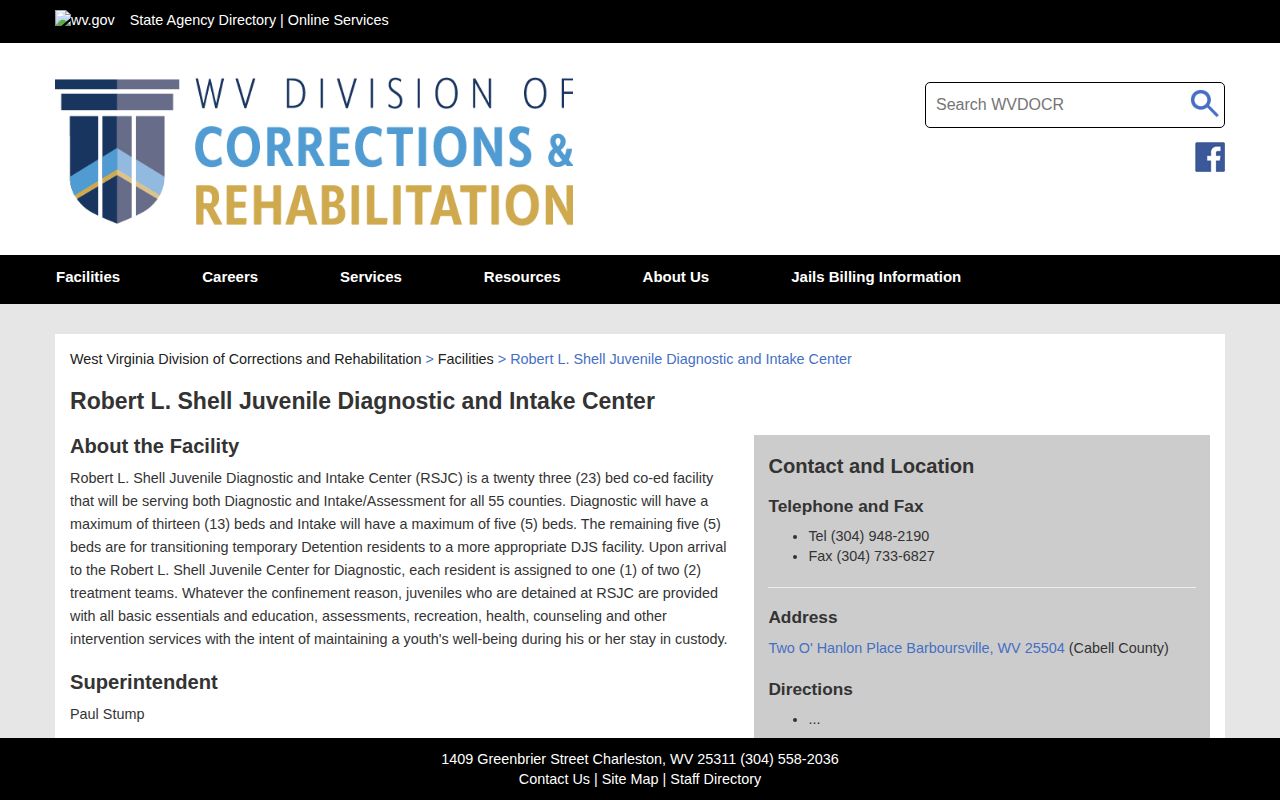
For adult Cabell County release records, use the separate Western Regional Jail and Correctional Facility page. Keeping the two facility systems apart protects youth confidentiality and leads adult requests to the correct custodian.
Older reports or third-party references should not override the current WVDCR facility source. If a facility name, contact route, or operating role changes, verify it through the Division of Juvenile Services before acting. That check should remain about the institution and authorized process, never about a named youth.